A practical framework for early-life care and observation. Practical information for producers, farm managers and agricultural businesses.
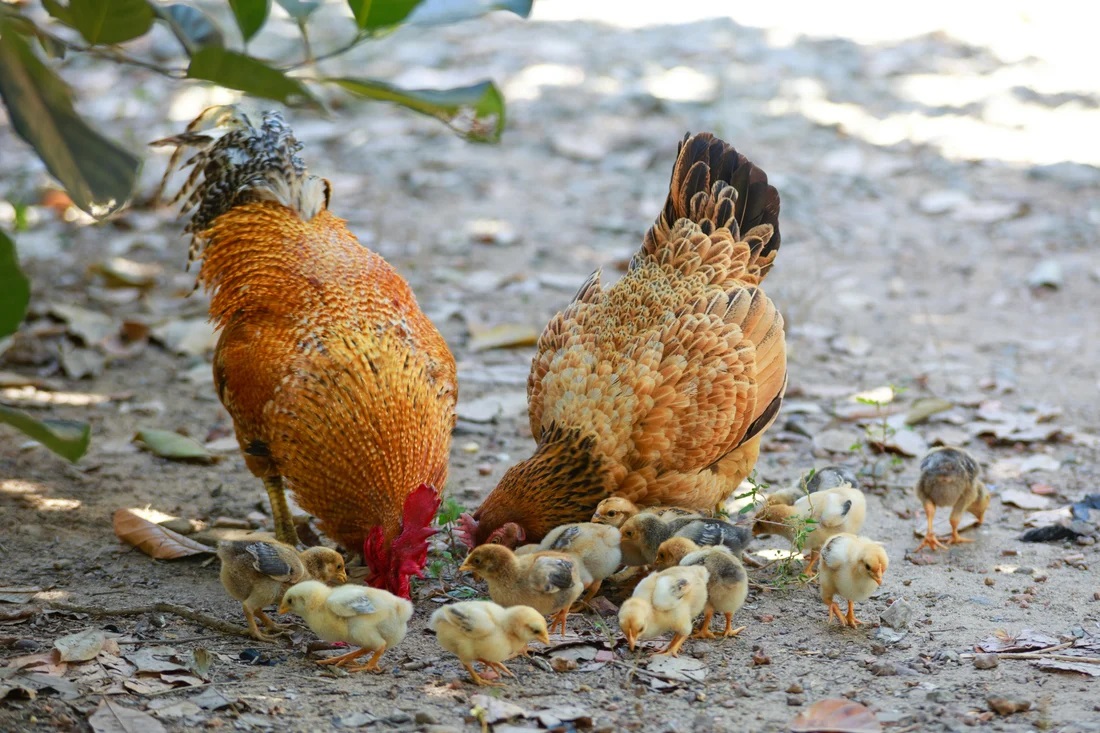
Successful broiler and layer production starts with a well-prepared brooding environment. Before chicks arrive, the house should be cleaned, disinfected and allowed to dry, equipment should be checked, litter should be prepared and feed and clean drinking water should be ready.
During the first days, pay close attention to chick distribution, activity, feed and water intake, litter condition, temperature, ventilation and signs of distress. Chicks that are evenly distributed and active are generally easier to manage than birds clustering at heat sources, avoiding an area or showing unusual lethargy.
Use the flock's behaviour and farm records together. Routine observation does not replace veterinary advice, vaccination programmes or local animal-health requirements; when illness or unusual mortality is suspected, contact a qualified poultry veterinarian or animal-health professional promptly.
Use these practical considerations as a starting point, then adapt them to your production system, local regulations and professional advice.
Clean and disinfect the house, prepare dry litter, test drinkers and feeders, check heating and ventilation, and make sure clean water and appropriate starter feed are available before chicks arrive.
Check distribution around the brooder, activity, feeding and drinking, droppings, litter moisture and any signs of weakness or respiratory difficulty. Record unusual changes rather than relying on memory.
Adjust equipment, ventilation and stocking arrangements as the flock develops. Maintain clean water, good litter management, biosecurity and a documented health programme.
Genetic foundation.
Controlled beginning.
Healthy development.
Consistent performance.
Verified output.
Customer value.
Start with the production objective, available facilities, expected market, input costs and the management capacity of the farm. A clear plan makes technical decisions easier to evaluate.
No. Housing, climate, breed, equipment, local disease pressure and market requirements differ. Use sound principles and adapt operating procedures with qualified agricultural or veterinary professionals.
Use the site to explore production information, livestock categories and farm production topics, then contact Valley View Poultry Farm to discuss your specific agricultural requirement.

 English
 Afrikaans
 Albanian
 Amharic
 Arabic
 Armenian
 Azerbaijani
 Basque
 Belarusian
 Bengali
 Bosnian
 Bulgarian
 Catalan
 Cebuano
 Chichewa
 Chinese (Simplified)
 Chinese (Traditional)
 Corsican
 Croatian
 Czech
 Danish
 Dutch
 Esperanto
 Estonian
 Filipino
 Finnish
 French
 Frisian
 Galician
 Georgian
 German
 Greek
 Gujarati
 Haitian Creole
 Hausa
 Hawaiian
 Hebrew
 Hindi
 Hmong
 Hungarian
 Icelandic
 Igbo
 Indonesian
 Irish
 Italian
 Japanese
 Javanese
 Kannada
 Kazakh
 Khmer
 Korean
 Kurdish (Kurmanji)
 Kyrgyz
 Lao
 Latin
 Latvian
 Lithuanian
 Luxembourgish
 Macedonian
 Malagasy
 Malay
 Malayalam
 Maltese
 Maori
 Marathi
 Mongolian
 Myanmar (Burmese)
 Nepali
 Norwegian
 Pashto
 Persian
 Polish
 Portuguese
 Punjabi
 Romanian
 Russian
 Samoan
 Scottish Gaelic
 Serbian
 Sesotho
 Shona
 Sindhi
 Sinhala
 Slovak
 Slovenian
 Somali
 Spanish
 Sudanese
 Swahili
 Swedish
 Tajik
 Tamil
 Telugu
 Thai
 Turkish
 Ukrainian
 Urdu
 Uzbek
 Vietnamese
 Welsh
 Xhosa
 Yiddish
 Yoruba
 Zulu